
The Most Common Mistakes White Belts Make (and How to Fix Them)
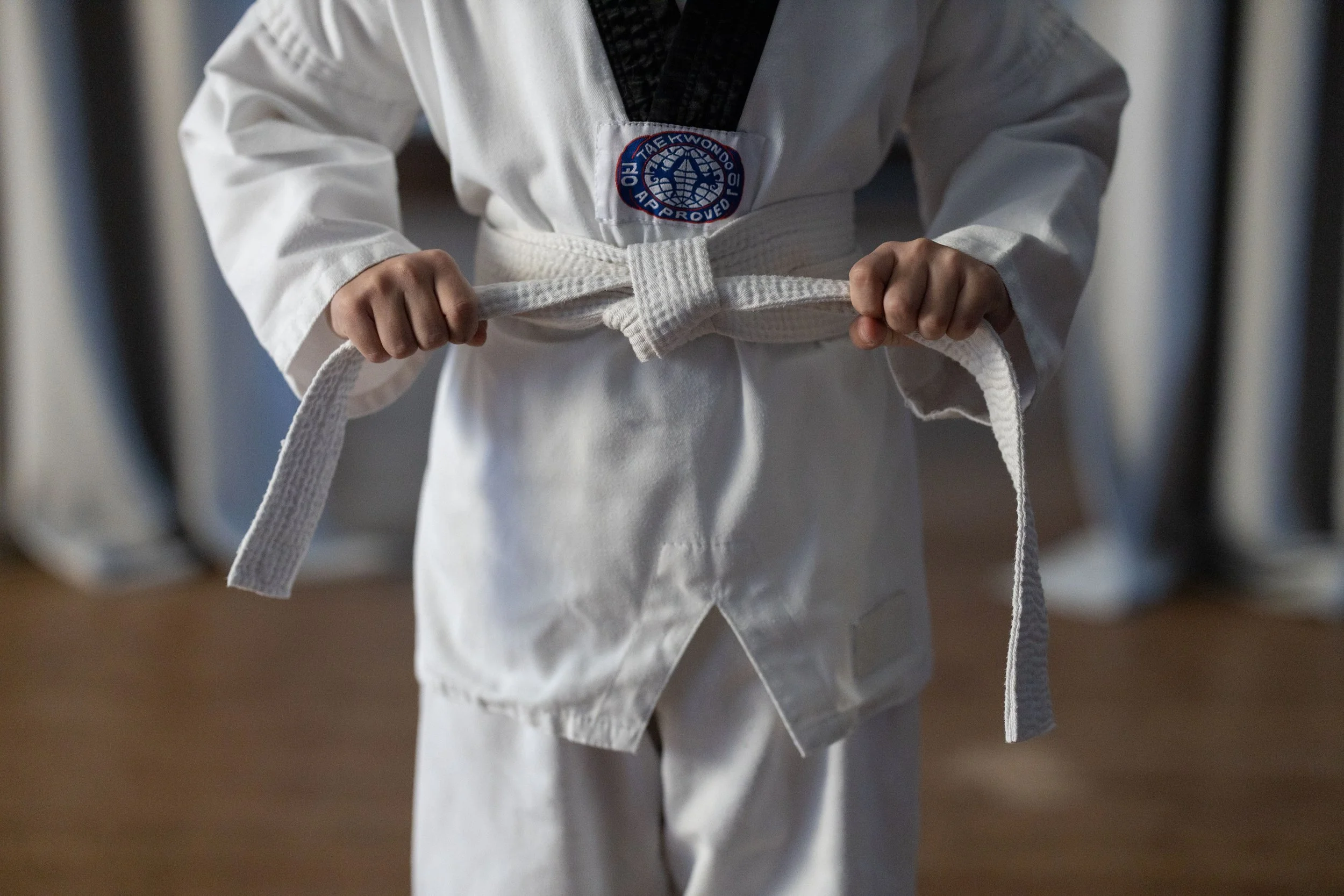
Brazilian Jiu-Jitsu has one of the steepest early dropout curves of any martial art. Estimates on exactly how steep vary, but multiple sources, including figures attributed to Rener Gracie, put the number of people who quit before earning a blue belt at somewhere around 90 percent. Even accounting for how loosely that number gets measured across different academies, the pattern is consistent everywhere: most people who try BJJ do not stick with it long enough to see real competence.
Talent is rarely the deciding factor. Most of the students who quit early are undone by a small set of habits that are completely fixable once someone points them out.
Mistake 1: Relying on Strength Instead of Technique
New students, especially athletic ones, often muscle through positions instead of learning the mechanics underneath them. It works against other white belts. It stops working the moment a smaller, more experienced training partner is on the other end, and that mismatch is discouraging in a way that feels like a skill problem when it is really a habit problem.
The fix: Deliberately train at lower intensity during drilling and even some live rounds, focusing on whether a technique works because of positioning and leverage rather than because of force. Coaches often describe this as training with a beginner's tension level even after strength stops being the limiting factor.
Mistake 2: Neglecting Defense and Survival
It is far more exciting to learn a flashy submission than to drill escaping bad positions. Most white belt curriculums undersell this early on, and students end up with an offense-heavy game that falls apart the moment they end up on the bottom of a dominant position, which happens constantly at this stage.
The fix: Treat defensive positions, especially escaping mount and side control, as seriously as any submission. Survival skill is what keeps a student in the fight long enough for their offense to eventually matter.
Mistake 3: Rolling With Ego Instead of Curiosity
Tapping is uncomfortable for a beginner's ego, so a lot of new students fight to avoid it instead of treating a tap as useful information. This slows learning considerably, because the moments right before a tap are usually the most instructive part of the entire round.
The fix: Reframe every tap as data rather than a loss. The question worth asking immediately afterward is what position led to that submission and how to avoid ending up there again, not how to avoid tapping next time through sheer stubbornness.
Mistake 4: Trying to Learn Everything at Once
New students are exposed to dozens of techniques in the first few months, and the instinct is to try to absorb all of it simultaneously. That approach produces a wide but extremely shallow game that falls apart under any real resistance.
The fix: Pick two or three positions to focus on deliberately for a stretch of weeks rather than treating every class as an isolated lesson with nothing connecting it to the last one. Research on skill acquisition consistently shows that focused, repeated practice on a narrower set of skills builds more durable competence than broad, scattered exposure, a pattern that shows up across sports far beyond BJJ.
Mistake 5: Having No System for Retaining What Was Taught
A student can attend four classes a week and still plateau if nothing from those classes is retained afterward. Techniques blur together without a system for organizing what was learned, and by the time a technique is needed live, the details have faded.
The fix: Build a simple, consistent way to capture new techniques after class, even briefly, and revisit that record instead of relying purely on memory. This is a large part of why BJJ Combos exists: it gives students a structured place to save techniques, chain them into combos that mirror how they actually get used live, and build toward an organized game instead of a pile of disconnected notes.
Mistake 6: Inconsistent Attendance in the First Few Months
Attrition research on martial arts consistently points to the same pattern: the students most likely to quit are the ones who never trained often enough, early enough, for the habit to take hold. Behavioral research on habit formation puts the median time to build a new habit at roughly 66 days of consistent repetition, which lines up closely with how long it typically takes a new BJJ student to stop feeling like every class is a fight for survival.
The fix: Prioritize consistency over intensity in the first few months. Two or three predictable classes a week for two straight months will do more for long-term retention on the mat than sporadic bursts of five classes one week and none the next.
The Bottom Line
None of these mistakes are about a lack of athleticism or toughness. They are habits, and habits can be changed the moment someone recognizes them. The students who make it past blue belt are rarely the most naturally gifted people in the room. They are usually just the ones who fixed a few of these habits early instead of letting them compound for a year.