
What Is Your BJJ A-Game and Why You Need One
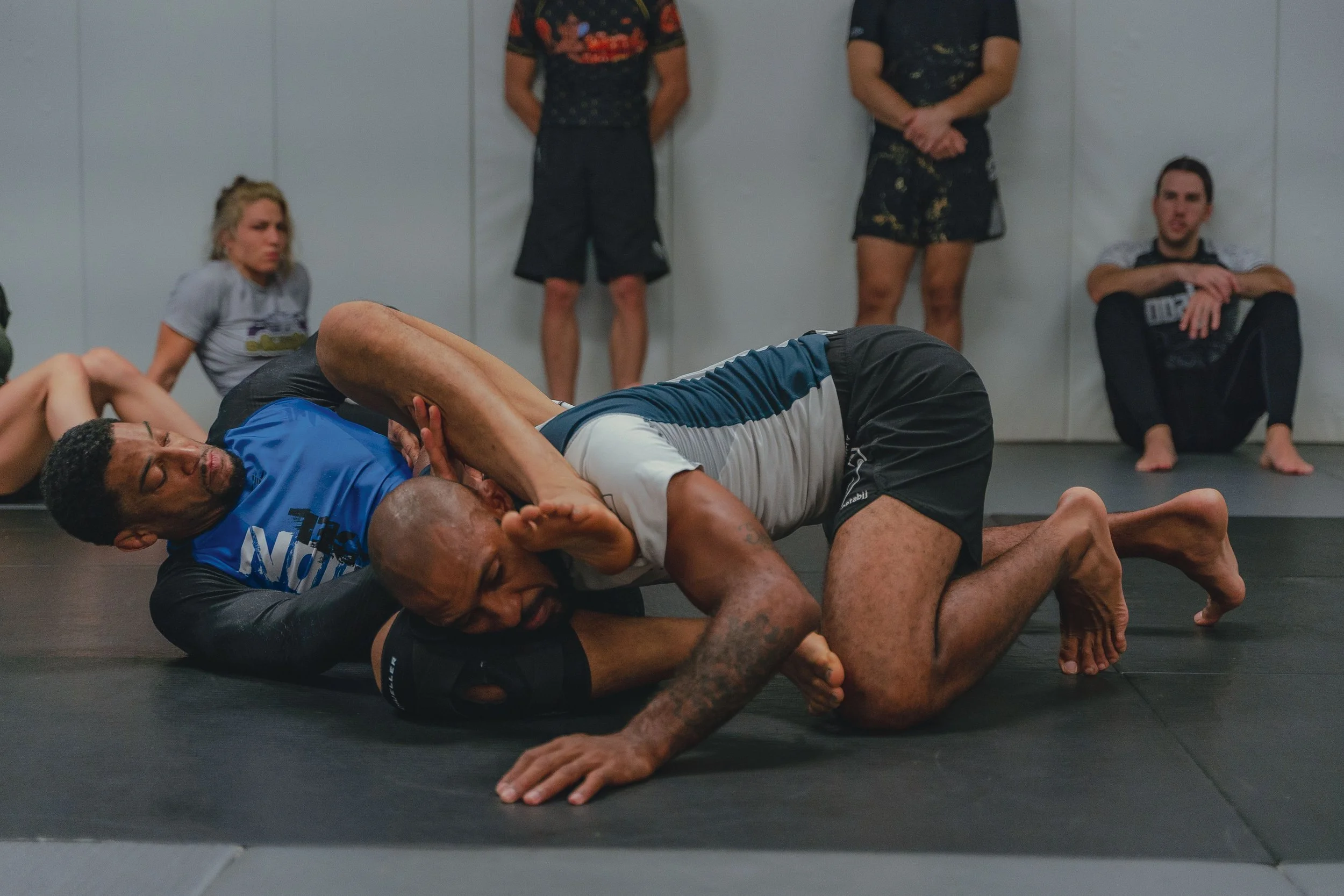
Walk into any academy and watch the higher belts roll. You will notice something odd. They are not using hundreds of techniques. They are using the same handful of positions, entries, and finishes over and over, just executed with more precision than everyone else in the room.
That small, trusted toolkit is what BJJ practitioners call an A-game. It is not a list of every move a student has ever learned. It is the short list they can pull off against a fully resisting opponent, under pressure, without thinking about it.
What an A-Game Actually Is
An A-game is a connected chain of positions and techniques that a grappler has drilled and tested enough times to rely on it live. It usually includes a preferred way to pass guard, a preferred guard to play, a couple of go-to submissions, and the escapes needed to survive when things go wrong.
The key word is connected. A random assortment of favorite moves is not a game. A true A-game links together, so if the first option gets blocked, the second option is already waiting. Coaches sometimes describe this as building a personal system rather than memorizing a list of techniques in isolation.
Why Specializing Beats Knowing a Little of Everything
New students often try to collect techniques the way collectors chase rare cards. They learn a bit of everything and master very little. That approach feels productive, but it usually stalls out around blue or purple belt, when opponents start being able to stop techniques that were only ever drilled lightly.
Research on skill development backs this up. Deliberate, focused repetition of a specific skill produces measurably better performance gains than broad, unfocused exposure, and the effect shows up consistently across sports and competitive games. A large meta-analysis of deliberate practice research found that structured, focused practice explains a meaningful share of the performance gap between higher and lower skilled athletes, particularly before the elite level. In other words, depth on a smaller set of moves tends to outperform shallow exposure to many.
That does not mean BJJ students should stop learning new techniques. It means the goal shifts from "learn everything" to "learn everything, but train a chosen few until they are automatic."
How to Start Identifying Your A-Game
Most grapplers do not choose their A-game with a spreadsheet. It tends to emerge from three things working together.
Body type and athleticism. A shorter, stockier grappler often finds pressure passing and top control more natural. A longer, more flexible grappler often gravitates toward guard retention and leg entanglements. Neither is better. They are just different starting points.
What keeps working in live rolling. The techniques a student instinctively reaches for when nothing else is available are usually a strong clue. If a certain sweep or choke keeps showing up in live rounds without conscious effort, that is worth building around.
Personality and risk tolerance. Some students like scrambles and chaos. Others prefer slow, methodical pressure. Both styles can be effective, but fighting your own instincts to copy a training partner's game usually slows progress rather than speeding it up.
The Trap of Building an A-Game Too Early
There is a common mistake worth flagging here. Committing to a narrow game too early, often in the first year of training, can backfire. New students have not yet been exposed to enough positions to know what actually fits them, and an early A-game frequently gets built around whatever worked against other white belts, which does not always hold up once training partners get better.
A more reliable approach is to stay broad through the white belt phase, start noticing patterns by blue belt, and begin deliberately narrowing the focus from there. This mirrors a broader finding in sports science: research on long-term athletic development suggests that early specialization is not the fastest route to lasting expertise, and that a period of broader exposure before narrowing focus tends to build stronger foundations without increasing burnout or injury risk in the same way.
Turning an A-Game Into a System
Knowing which moves belong in an A-game is only half the job. The other half is organizing them so they connect the way they do in live rolling, entry leads to control, control leads to a finish, and every branch has an answer if the opponent defends.
This is exactly the gap BJJ Combos was built to close. Instead of a notebook full of disconnected techniques, students can build actual combos that chain moves together, group related combos into systems built around a single position, and organize the whole thing into a gameplan for a specific goal, whether that is an upcoming competition or simply tightening up a guard passing sequence. Coaches can build the same structure for their students, so an academy's curriculum and each student's personal A-game reinforce each other instead of existing separately.
The Bottom Line
An A-game is not about limiting what a grappler can do. It is about knowing exactly what to reach for when the round is close, the position is bad, and there is no time to think. Every high-level competitor has one. Building it earlier, and on purpose, is what separates steady improvement from years of collecting techniques that never quite connect.